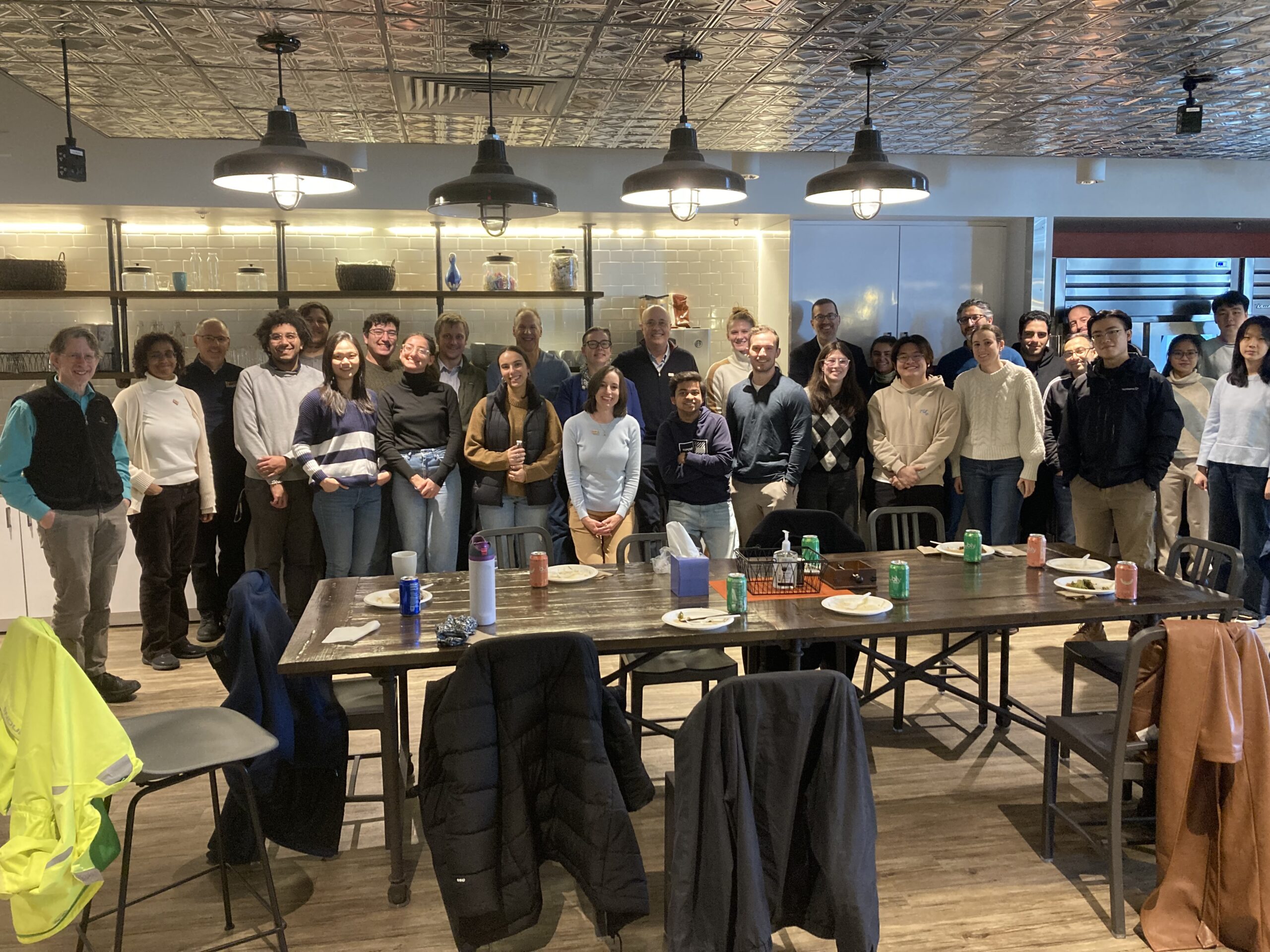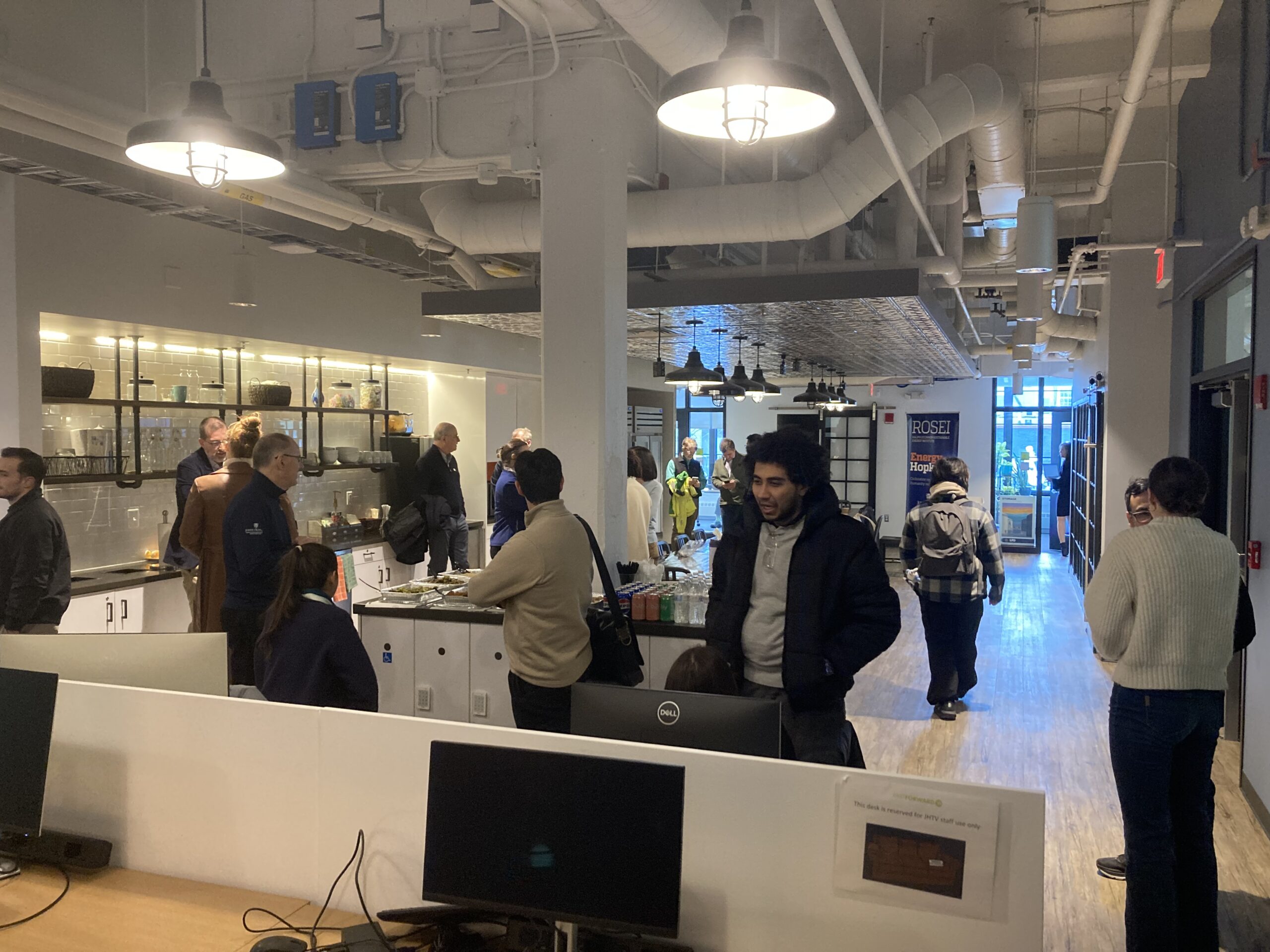
The Ralph O’Connor Sustainable Energy Institute (ROSEI) at Johns Hopkins University further affirmed its support for wind energy by hosting an event on November 17 as part of the national “Yes to Wind” campaign, an effort that promotes expanding offshore wind energy. ROSEI’s was one of four Maryland Yes to Wind events held in November.
Led by volunteers at Climate Action Rhode Island (CARI) and including allies that span the East Coast, Yes to Wind focuses on increasing the number of offshore wind projects connected to the grid in ways that will benefit communities, such as from providing well-paying local jobs realizing the health benefits resulting from clean, reliable, homegrown energy.
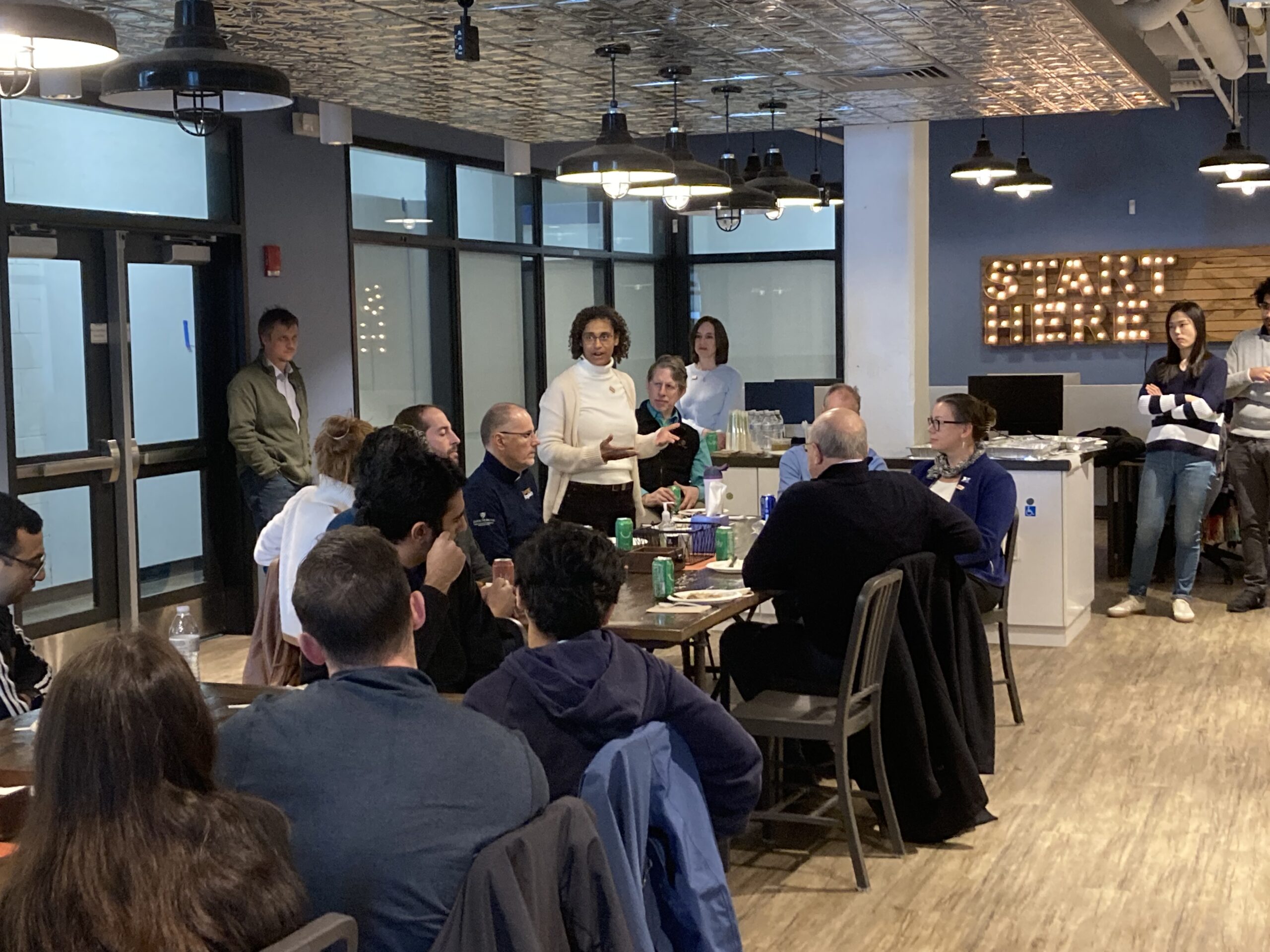
Over 30 faculty, postdoctoral researchers, and graduate and undergraduate students attended the lunch. Participants shared their “Yes to Wind” moments—the events that made them decide to pursue a career or studies in the field. Speakers included faculty members with decades of experience in the field and leaders of the Academic Center for Reliability and Resilience of Offshore Wind (ARROW), graduate students that are ready to launch their careers, and undergraduate students who are new members of the Hopkins Student Wind Energy Team.
“It has been a difficult period for the wind energy field recently, but I was really encouraged by how many people came to the luncheon, and how diverse the group was,” said Ben Schafer, ROSEI’s director. “I was blown away by the different creative approaches everyone is taking to furthering wind science, engineering, and policy and all the different expertise people bring to the discussion. It was just so affirming to see everyone from undergrads to full professors say yes to wind, and I came away feeling that the field is in fantastic hands moving forward, especially at Hopkins.”
ROSEI and Hopkins have been longtime leaders in the wind energy field. Most recently, ROSEI released a public wind farm database, the Johns Hopkins Turbulence Databases – Wind, which provides massive amounts of data from computer simulations of turbulent flow in wind turbine arrays to help in wind farm design, analysis and operational increases to power output. This publicly available resource, which was created by ROSEI’s wind leaders, supports everything from academic studies to practical wind farm planning and development projects.